
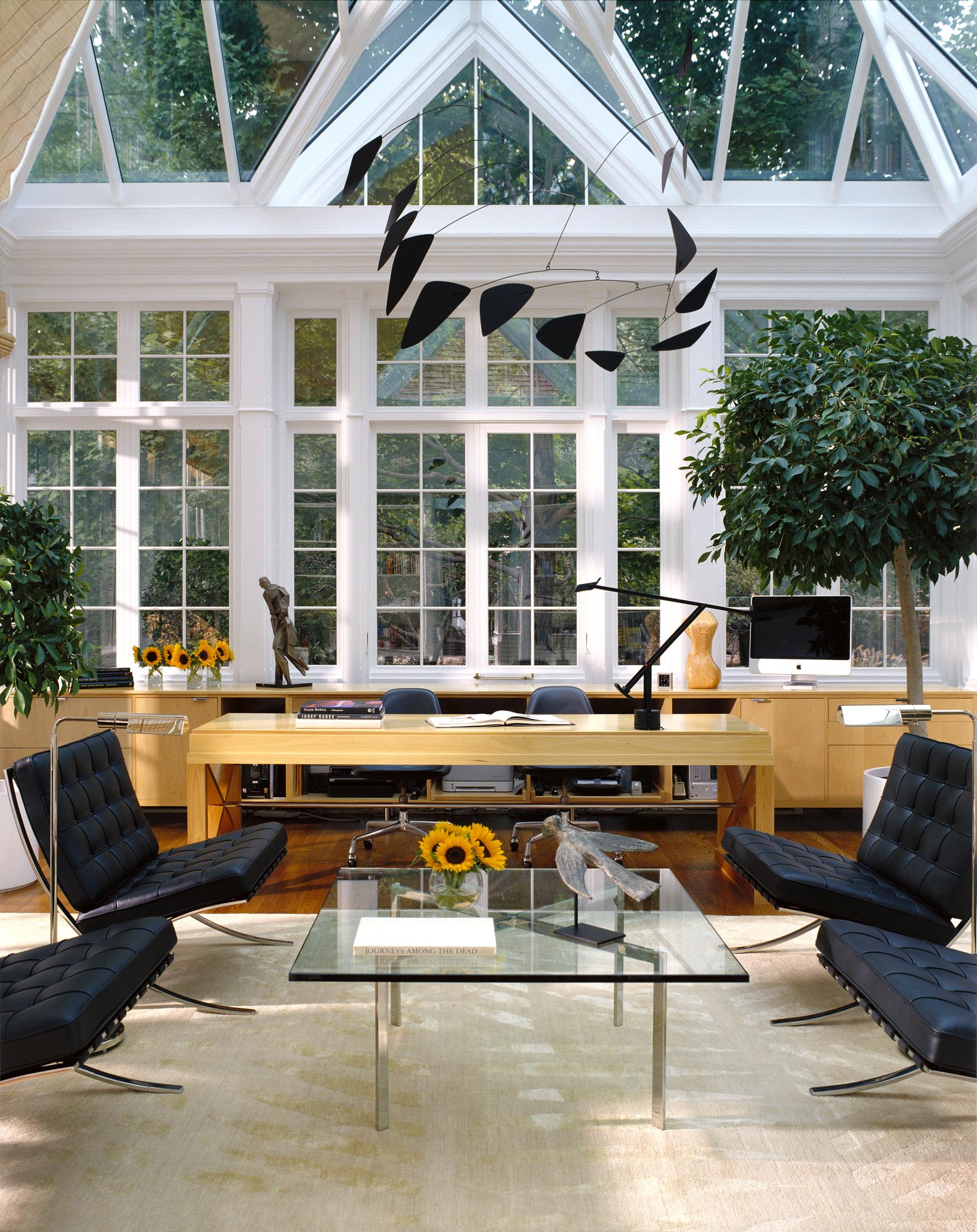
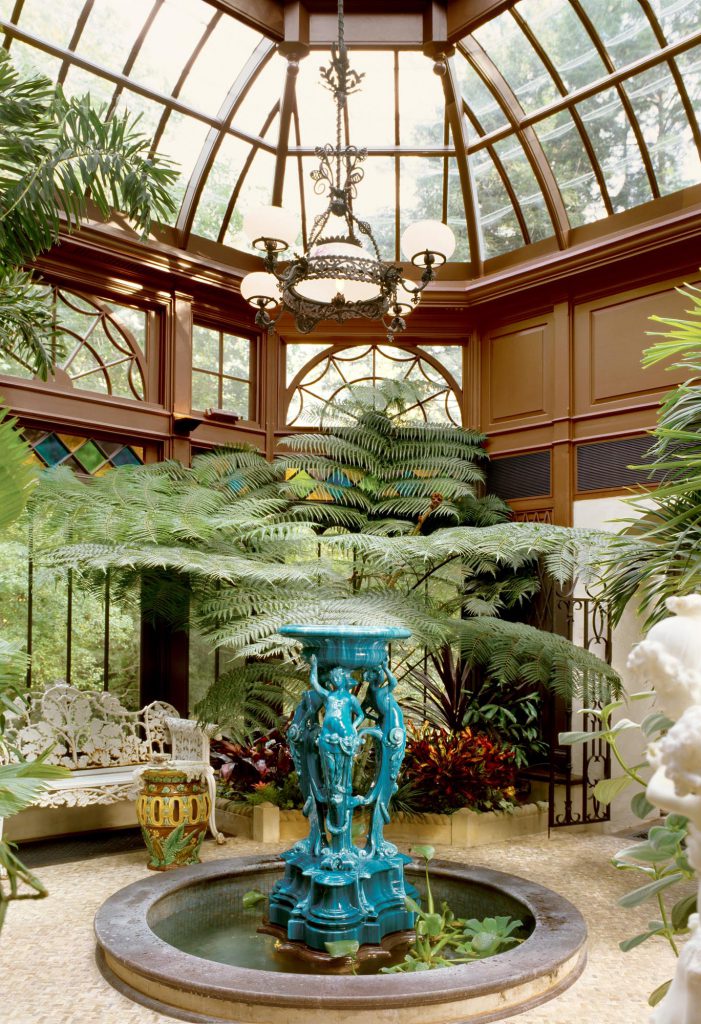
Surrounded by the warmth of natural light and using the beauty of nature as your décor, conservatories are often used in biophilic design for home offices!
Why??
Do you ever find yourself taking your lunch outside on a warm, sunny afternoon? Do you go for a run on the trail in the morning to get yourself motivated to take on the day? Or maybe you like to have soothing nature sounds playing subtly in the background while you work? Many studies have shown that increasing our connection to the natural environment helps improve our physical and psychological well-being. As the average person spends more than 80% of their life indoors, increasing our exposure to the natural world in the built environment can be a tremendous help!
Below, we’ve listed a few ideas to help create that perfect working environment at home.
1 | Take Advantage of the Expansive Views Conservatories Offer
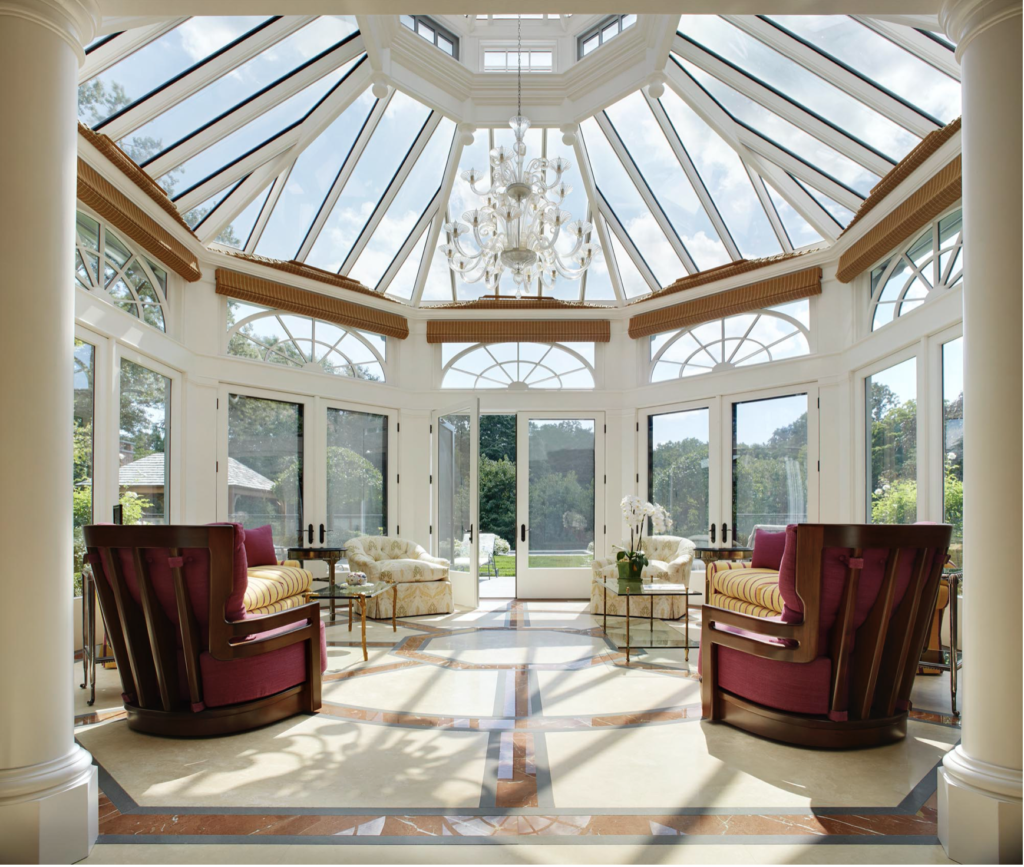
When you think about the elements that make up biophilic design – maximizing natural light, nature-themed décor, direct presence of nature in the space, and the inclusion of spatial elements – conservatories, orangeries, large skylights, and even expansive window walls are great architectural solutions. Their open floor plan and vast use of glass allow for a well-lit environment that captures the beautiful views of your property.
If you are considering adding a conservatory to your home, think about where you can capture the most amount of daylight. For many, south facing is typically the desired location but it depends on where you are located. You can control the amount of light entering your conservatory with shades or specialized glass to automatically tint based on the sun’s position in the sky. This is also a tool to help control the temperature in conservatories.
Another important thing to consider is when sitting in the space, what do you want to look out to? Setting the picturesque scene will benefit you long term so once you set up and start working in your conservatory office, you find yourself wanting to be in this room every day!
2 | Bring the Outdoors, Indoors with Conservatories!
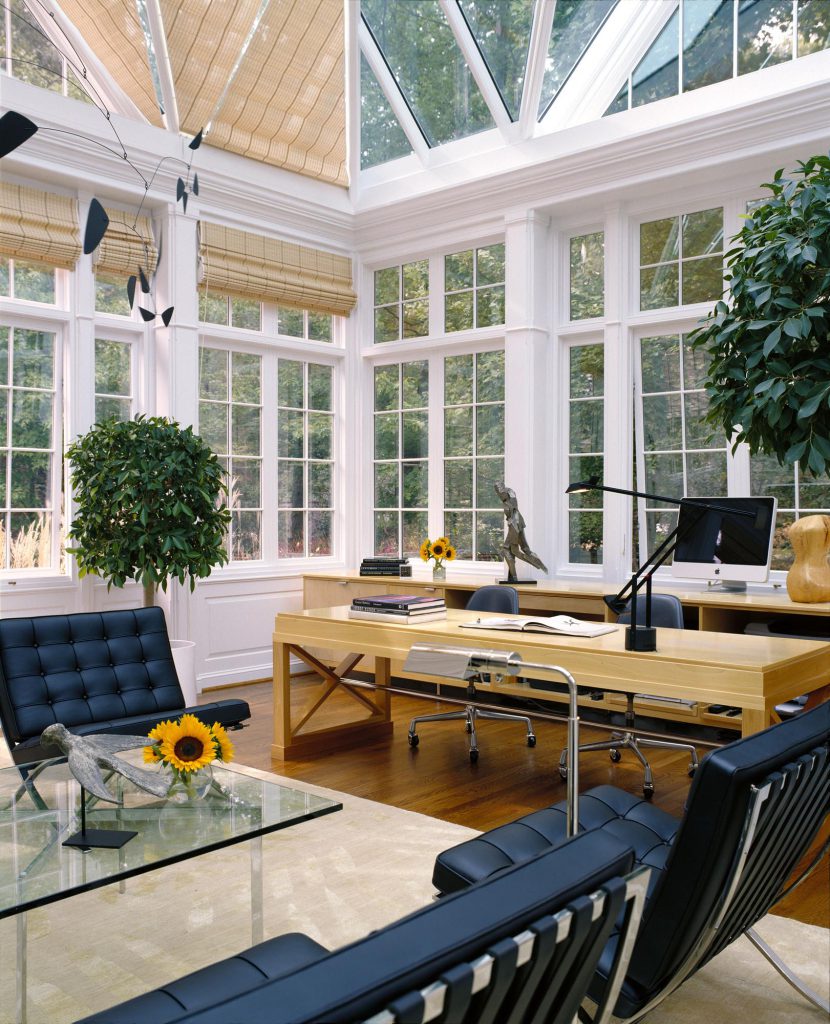
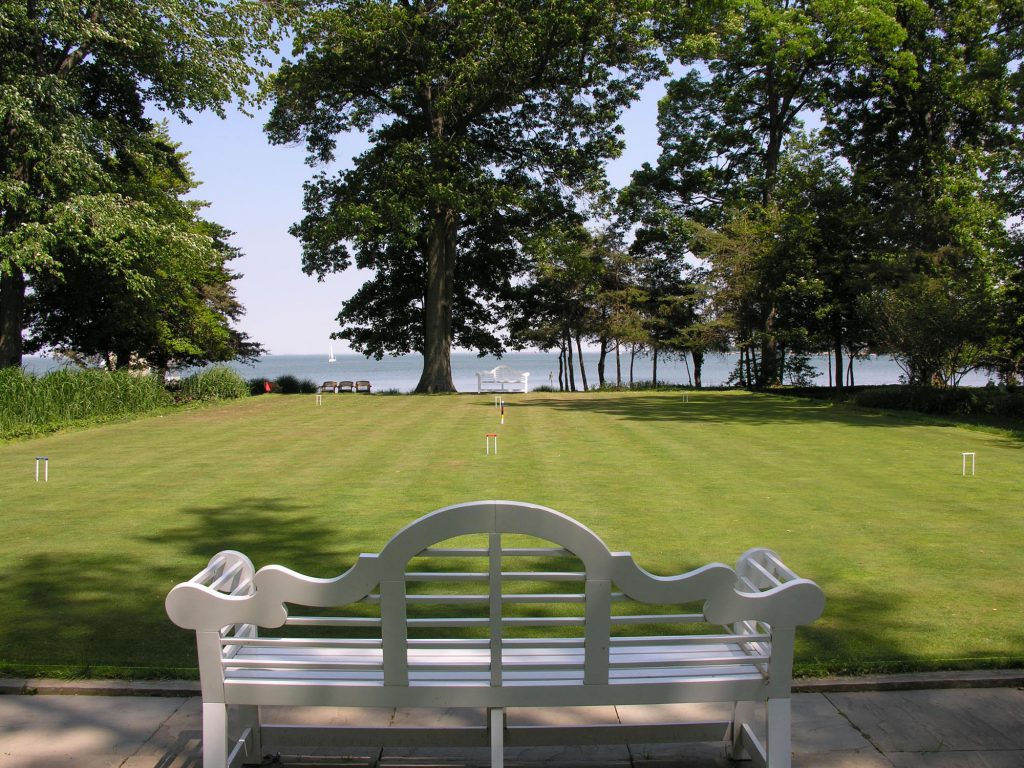
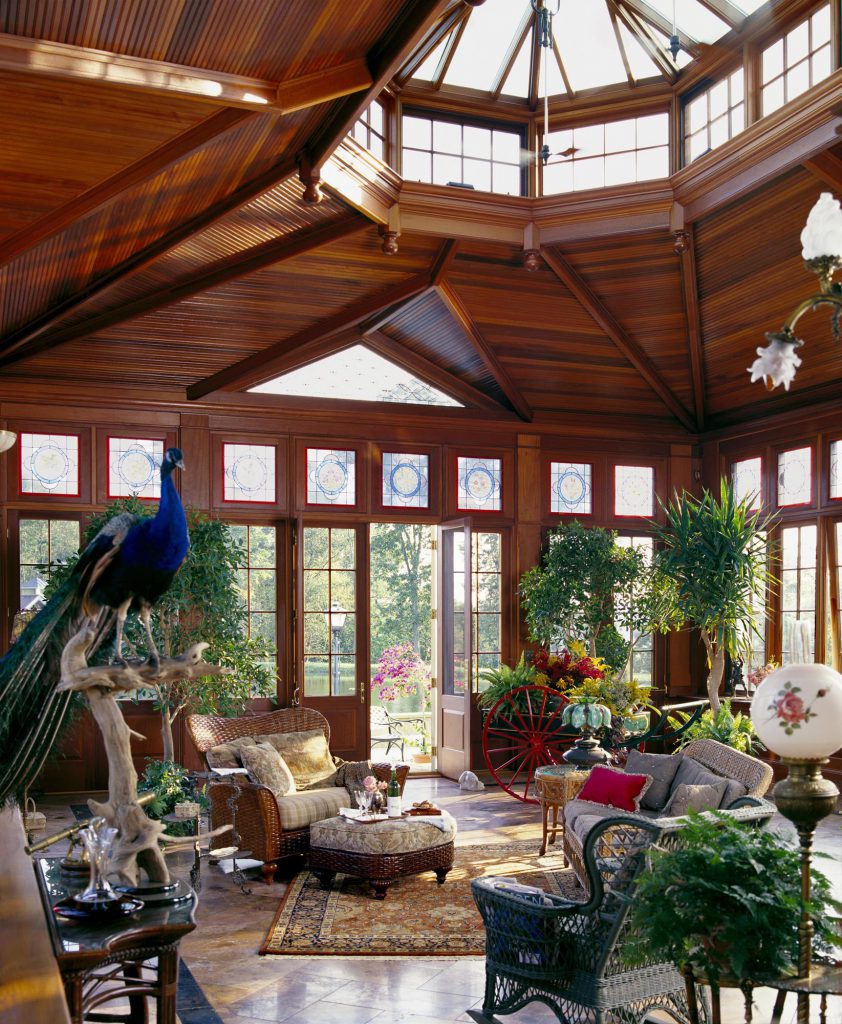
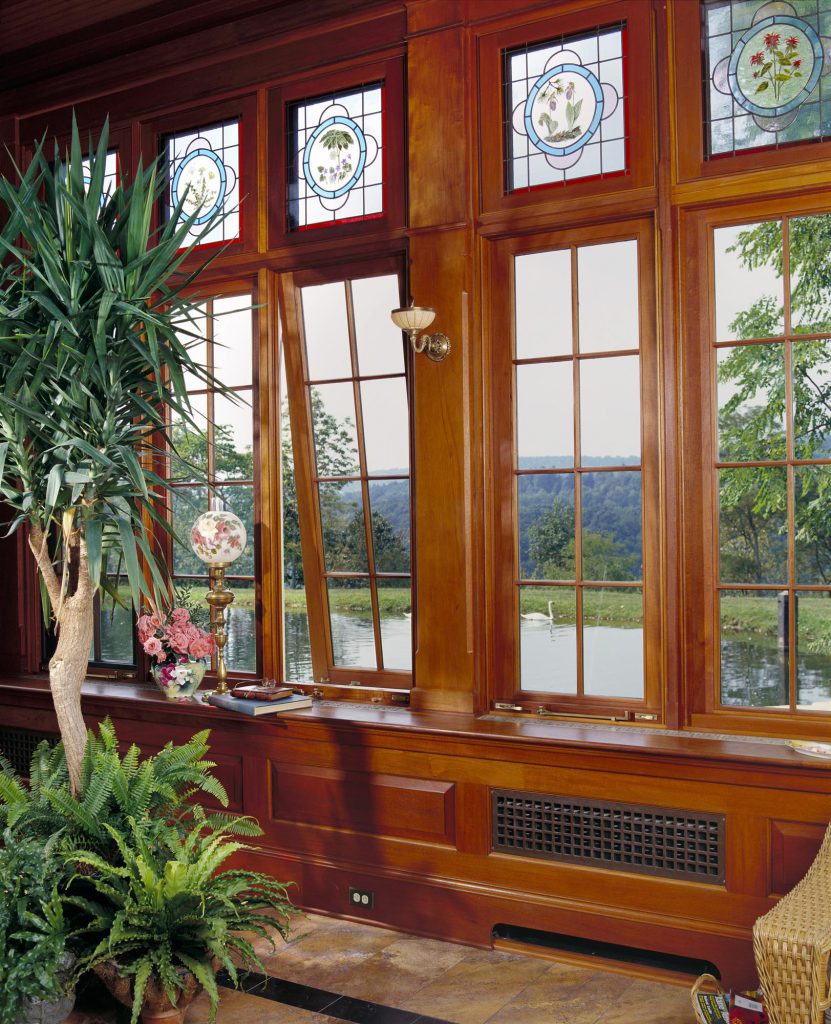
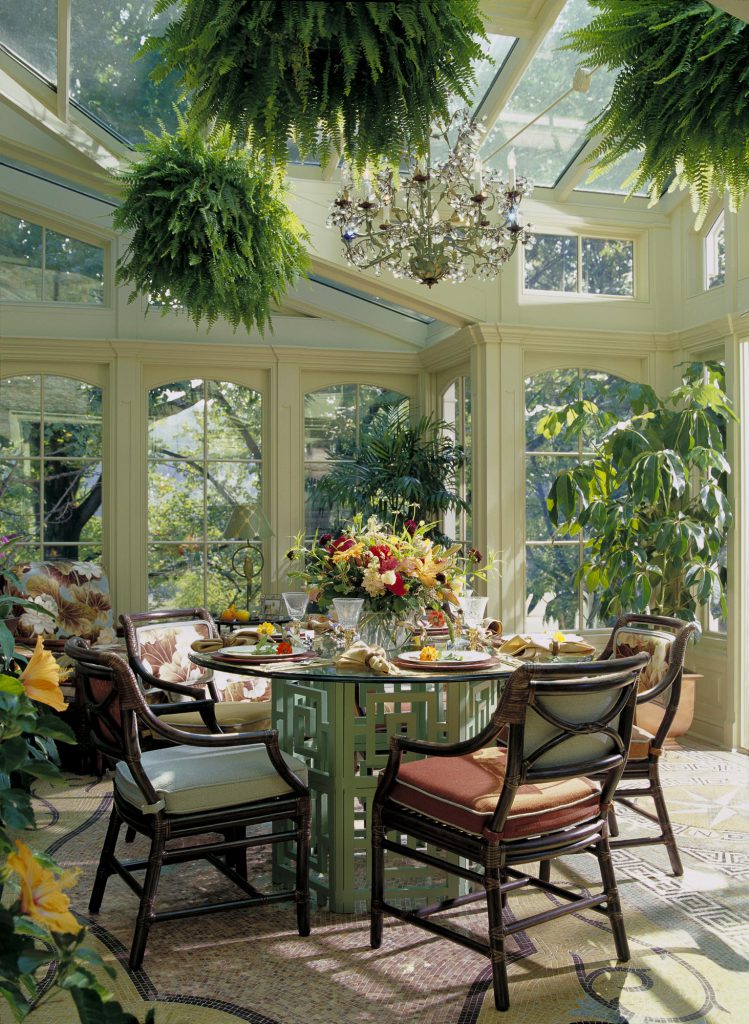
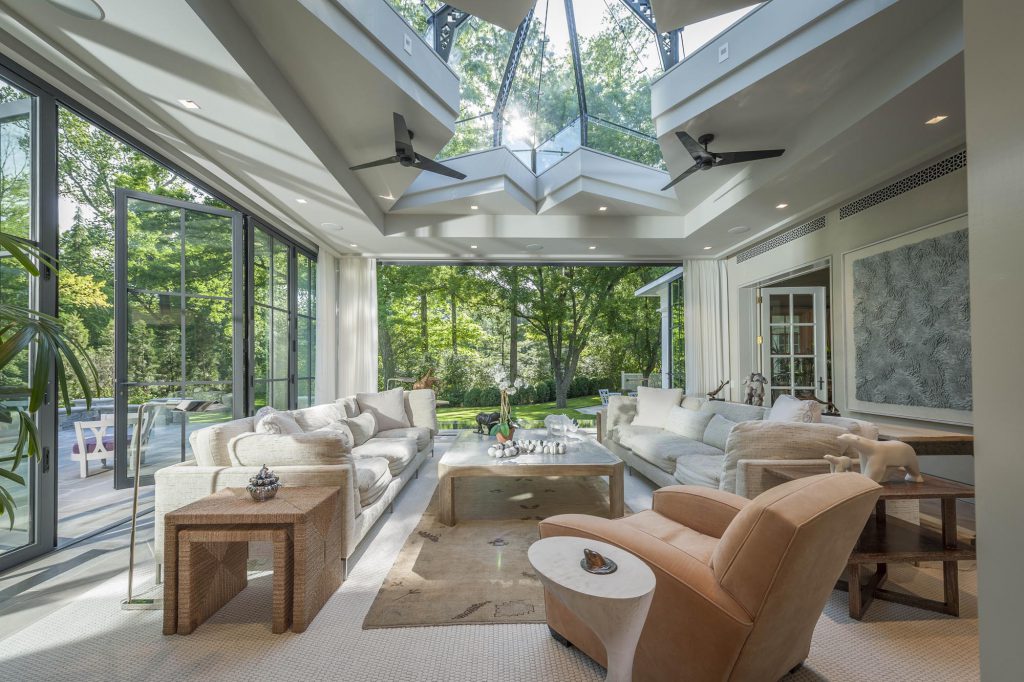
Aside from pushing out fresh oxygen and moisture to the room, there are several benefits that come from working alongside living plants. Having a view of plants from your workstation can help reduce stress levels, focus your mind, and lessen mental fatigue. Consider having operable windows and roof vents in your conservatory to allow dynamic airflow movement and natural fluctuations in temperature (when desired). Listen to the birds chirping or the soothing sounds of waves crashing to keep you well relaxed and focused on your work.
Over the years, we have written a few pieces on what types of plants thrive in conservatories and how to add visual interest. We listed a few below, but for more ideas, visit the Tanglewood Blog!
o How to Plan for a Conservatory as Part of the Landscape
o Add Visual Interest to the Plantings in Your Conservatory!
o Zen and the Art of Bonsai in a Conservatory
3 | Interior Design for Function and Beauty in Conservatories
As we have mentioned, there are several components to keep in mind when creating a biophilic-centred space: The use of natural materials, the inclusion of natural elements like plants and animals, and a great natural view, to name a few. There are also biophilic patterns to follow for crafting the optimal space, according to Terrapin, a sustainability consulting firm. We listed patterns they identified in their article, 14 Patterns of Biophilic Design: Improving Health & Well-Bring in the Built Environment, below based on their Biophilic Category:
- 1. Nature in the Space
- Visual Connection with Nature
- Non-Visual Connection with Nature
- Non-Rhythmic Sensory Stimuli
- Thermal & Airflow Variability
- Presence of Water
- Dynamic & Diffuse Light
- Connection with Natural Systems
- 2. Natural Analogue
- Biomorphic Forms & Patterns
- Material Connection with Nature Complexity & Order
- 3. Nature of the Space
- Prospect
- Refuge
- Mystery
- Risk/Peril
Click here to read more about these patterns >> 14 Patterns of Biophilic Design
Whether you are wanting to create the perfect home office or just a place in your home where everyone is drawn to, click the button below to see how families around the world are incorporating biophilic design in their homes with conservatories! To start exploring your ideas for your own conservatory, reach out to our team at 410 479 4700 x104 or visit our project page at https://tanglewoodconservatories.com/inquire-contact-tanglewood-conservatories/